
Hello Everyone,
At the start of October T&M asked on their Facebook page, “What do you like best about this month?” There were many comments including my own, but thinking about it a bit more now, I have to say I think I like how you still have time to grow a few more seeds in the greenhouse before winter fully sets in. We have been so lucky here lately, it has not rained since September and it’s still warm enough to go outdoors without a coat. We have had no frost, and only had to have the heating on once or twice in the last two weeks in the evening.

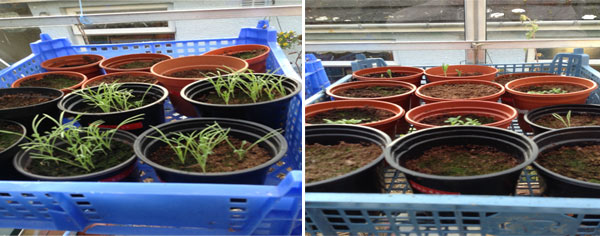
I am so pleased that when I order seeds from Thompson & Morgan’s website it only takes a couple of days for them to arrive, this has meant that I have been able to make a start on my early spring vegetables. I have sown in the very first week of this month Cauliflower, Calabrese, Broccoli and Cabbage. I also had some left over pea seeds Alderman Heritage, Radish, Calendula, and Nigella, so they have been sown too. I was really surprised how quick the broccoli and cauliflower and radish germinated, I am still waiting for the Pansy, Godetia, Laurentia and Knifophoas to germinate from last month.
 Another surprise I had was that some tomato seeds germinated in the borders of the big greenhouse. I have no idea what variety they will be. They were near the sungolds, so I am hoping it will be them. Mark has potted them up into individual two and half inch pots and they are in the small greenhouse as I am hoping they can be kept up heated over winter in there. I thought that when it gets colder I will wrap the pots in bubble wrap to keep the roots warm. I have no idea if this will work or not as I have never had tomato seedlings germinate in October, in a greenhouse border. I am usually very vigilant in removing all fruit, stems, leaves from the borders to prevent harbouring pests and diseases. The frustrating thing is that I was sent tomato seeds from Terri that arrived literally on the same day we found the seedlings. However, seen as I really don’t think the October tomatoes will still be alive next year as I am not planning on ever having a heater installed
 in one of the greenhouses, I am really looking forward to growing Mountain Magic it’s specifically bred to be more blight resistant. Also I certainly won’t be putting in ten tomato plants it was too many for me to handle. I know next year six tomatoes will be the maximum for the big greenhouse and maybe three for the little one.
Just today we had confirmation that workmen are going to be painting our bungalow and replacing the external doors, so we have had to remove the hanging baskets and summer pots in readiness for them next week. So some plants that have been enjoying the summer sun have now had to be moved to the big greenhouse earlier than expected to ensure their protection. I have a load of Aloes, and Money Tree plant that need to be repotted, but for now they are sat on the greenhouse path waiting my attention.
We work full time so realistically most of the gardening is done on evenings and weekends, it’s getting dark quickly now, by seven the sun is almost setting, also the temperature drops rapidly once the sun has gone down. I may be lucky to hop into the greenhouses between making the next day’s sandwiches and cooking supper between five and six, but once the clocks go back and the weather changes I find it very difficult to go out in the cold and dark. Also I will be finding out in December if I am going to be having heart surgery or not, so I am planning to grow only what I can reasonably manage to look after.
In our small greenhouse we still have a continuous supply of spinach beet, I am really pleased as it’s a brilliant source of iron and it can be eaten raw or cooked. I like to lightly steam it, or sometimes just rip a few leaves into a stir fry. I recently found a recipe for spinach and pumpkin soup which seems ideal for Halloween. The carrots are starting to raising themselves out of the soil, on T&M’s website it says that with a bit of planning carrots can be more or less grown all year round, but they need protection from the worst of the weather.

Carrots take around twelve to sixteen weeks to mature and can be left in the ground until you’re ready to eat them. By growing carrots in the later seasons it reduces the chances of being destroyed by carrot fly. Carrot flies are attracted to the plant by oils released from the leaves or stems so it’s best to pull carrots in the evening.
 On the shelves I have the baby veg seedlings, sweet peas, yarrow, Californian poppies and herbs. I also have empty plastic pots ready to transplant seedlings into. I have a collection of Christmas Cacti that need to be repotted after spending the summer under hot glass; they will be brought in and put on the bathroom windowsill where they will flower from November to January. I have a spider plant that I have no room for inside; it came from Dad’s so I don’t want to lose it, but I am not sure if it will survive the winter in the greenhouse. Finally, I will need to dust off the old blue bread trays for storing the begonia bulbs this winter. The begonias are still in flower so hopefully we don’t get any frost as they don’t look ready to die back any time soon. We usually leave the gazinas and dahlias in situ as although we have frosty days, it’s been at least five years since we have had a really harsh winter. In Pembrokeshire we tend to get west/south west winds or gales and an awful lot of rain rather than snow.
Whatever the weather there’s always something that needs doing in the greenhouse!
I’ll be honest with you, the last few winters I have tended to just pick the last of the produce in October, do a big tidy up, wash the glass down then shut the door until January when I start off the sweet peas. However this year it’s going to be different, it would be a sad sight if my new greenhouse was to remain empty for at least three months. There is a plethora of veggies that can be grown now from Brassicas to Onions and Shallots, and if growing food isn’t your thing, just think of how pretty your garden will be in the summer with strong bushy flowers such as fuchsias, dahlias, or or cannas overwintered under glass.
Until next month.
Happy Gardening,
Love Amanda X

My name is Amanda and I live in Pembrokeshire with my fiancé and our garden is approximately 116 meters square. I want to share with you my love for gardening and the reasons behind it, from the good to the bad and ugly. I want to do this for my own personal pleasure. If you would like to take the journey with me then please read my blogs and share with me your gardening stories.





 I set two classes for the challenge – most number of chillies on one plant, and the healthiest looking chilli plant. To level the playing field I provided everyone with a stash of 2 litre pots and the plants had to be grown in these. Other than this they had free reign on compost choice, fertiliser and training (staking, pinching out, etc).
 Judging was carried out in the morning, I then returned for the open show in the afternoon, bringing with me my best Numex Twilight plant to show the rainbow of colours that everyone could expect from their plants. Winners announced, I was called on to read out the raffle winners, many of whom went home with


 I am sorry for the slightly short blog this month, I think it’s because of the season drawing to a close. I was hoping to have more interesting things to say, but I’m in a limbo, this year has been nothing like our last few years, although I do like the challenge of these new conditions. What I had planned to write about in certain months had either happened earlier or not at all! But don’t worry I still have plans for the greenhouses in the next few months. Meanwhile I am going to find a new home for the dahlia one of my brothers bought me for my birthday a few days ago. I’ve stuck it in the little greenhouse as I don’t want it to get wrecked in the storm. I leave dahlia bulbs in the ground in the mild winters but this year guess where they will be?


 Garlic